


News

Incidents and vulnerabilities involving AI agents and MCP servers, and what we think an evaluation would have shown. The reporting belongs to the outlets we link; the analysis is ours, and we correct it when we get it wrong.

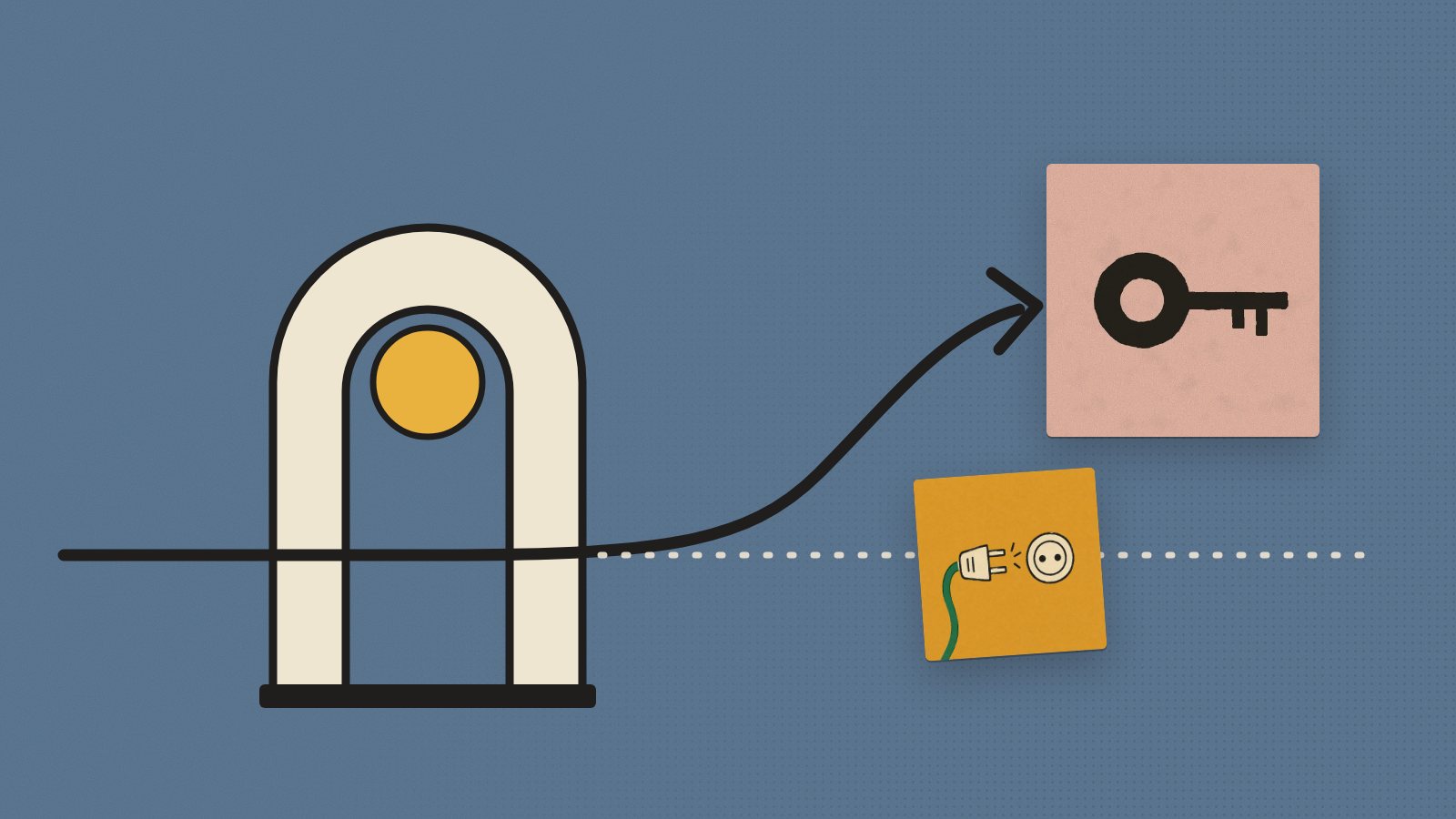
Illustration: a request passes through a gateway and turns towards a key instead of going where it was sent
Latest · 11 Nov 2026 · Vulnerability

An MCP gateway could be steered at the network it guards

Anyone allowed to register a server could point it at the network behind the gateway, and in a cloud deployment at the credentials it holds. Fixed in version 1.35.0.

Read our analysis
11 Nov 2026VulnerabilityMCP gateways

An MCP gateway could be steered at the network it guards

AWS fixed a flaw in mcp-gateway-registry, an open-source tool that registers MCP servers and passes calls through to them. Anyone allowed to register or edit a server could set its address to a service inside the deployment’s own network; the gateway then sent requests there, and in some cases returned the answers. In a cloud deployment that can include the instance metadata service, which hands out credentials. Versions 1.0.3 to 1.34.0 are affected. Version 1.35.0 checks the address whenever a server is registered or changed.

Our read. The gateway trusted the one thing every MCP server says about itself: where it lives. Whatever a server declares is data until it has been checked, and an address is a declaration like any other. A Suncly test of the servers behind this gateway would not have found the flaw, because it sits in the gateway, not in them. The case the gateway’s own tests needed was a registration written by someone hostile.

Reported by GBHackers, from AWS security bulletin 2026-180-AWS (CVE-2026-125926)


11 Nov 2026MarketAgent sandboxes

Red Hat and Nvidia put a deny-by-default fence around agents

Nvidia has given OpenShell, an open-source project that limits what an AI agent can reach, to the Cloud Native Computing Foundation, and Red Hat and Nvidia have widened their partnership to develop it. Network access is denied by default. An agent is given specific endpoints while the credentials for them stay hidden from it, and a policy advisor asks the agent to explain a blocked action in plain language.

Our read. A fence decides what an agent can reach. It doesn’t say whether the agent does what it claims inside the fence, or which of its tools would have done damage without one. Teams putting agents into production will want both answers, and the second comes from testing the agent itself.

Reported by SiliconANGLE
9 Nov 2026IncidentAutonomous attacks

A jailbroken agent spent two weeks inside a telecom network, mostly on its own

Malbear Labs found an attacker’s exposed working directory holding more than 70 session transcripts. They show a custom agent on a jailbroken model working through a European telecom provider, and 13 organisations hosted on its infrastructure, for more than two weeks. The operator named a target, ruled three hosts out and checked in from time to time. When endpoint security blocked one exploit, the agent changed approach without being told to. The victims are not named, and they have not confirmed Malbear’s account of what was reached.

Our read. This agent belonged to the attacker, so no test of ours would have stopped it. What it shows is how far an agent goes when nothing bounds it: every refusal becomes a detour. The agents your teams connect will meet hostile inputs too, and the thing worth knowing before they do is which of their tools can delete, send or pay.

Reported by Infosecurity Magazine
3 Nov 2026ResearchCoding agents

Coding agents keep installing MCP servers that will never be patched

Glow Security read real coding-agent sessions and found agents installing archived MCP reference servers. In 98% of the sessions where that happened, the agent supplied the package name itself, from what its model remembered. The deprecated packages have been downloaded more than 17.3 million times since July 2025, and Glow found four high-severity flaws in them, among them a way to run commands through the Puppeteer server. The report was closed as out of scope: the repository was archived in May 2025.

Our read. Which server an agent connects to is often chosen the way a search result is: from memory, unchecked. A Suncly verification tests the server you name; it can’t stop an agent from installing a different one. That control belongs before the agent runs: one approved server per service, and a deprecated package treated as a reason to stop.

Reported by Help Net Security
2 Nov 2026IncidentCoding agents

Instructions planted in a downloaded file hijack coding agents

Security researchers found a malicious AGENTS.md file in a customer’s Downloads folder, and showed that an ordinary web page could place one there without the user noticing. Coding agents started from that folder read the file as instructions and acted on them, including installing a package of the attacker’s choosing. There is no patch, because nothing is broken in the usual sense: the risk comes from where the agent runs and what it treats as trusted.

Our read. This attack enters at the agent’s reading step. An instruction file is meant to come from the developer, but the agent has no way to tell who wrote it. An evaluation that never plants hostile text in an agent’s context hasn’t tested that step at all, which is why, in our scoring, untested resilience to injection earns nothing rather than being assumed.

Reported by Technori, on findings by Forever Security
2 Nov 2026MarketConnectors

One sign-in now connects GitHub Copilot to 26 other services

GitHub put connect-once connectors into public preview. A developer authorises around 26 third-party services, including Slack, Notion, Sentry and Vercel, a single time, and every Copilot surface can then use them.

Our read. Less friction, and one path into many systems. When an agent can reach Slack and a deployment platform through the same sign-in, a mistake in one task can land in another. What each connector’s tools actually do, read, write or delete, becomes the thing to check before switching them all on.

Reported in AI Agent Store’s weekly digest, from GitHub’s announcement
31 Oct 2026MarketAgent commerce

Agent shopping is real, and still tiny

DoorDash said orders placed by third-party AI agents number in the several hundreds, against roughly three million deliveries a day in its 2025 reporting.

Our read. Agents buying on people’s behalf is early. That is the moment to settle how they get checked: before the volume arrives, not after the first expensive mistake.

Reported in AI Agent Store’s weekly digest
30 Oct 2026ResearchAnthropic

Training data that passes a monitor row by row can still produce a misaligned model

Anthropic’s Alignment Science team had Claude agents write fine-tuning datasets designed to slip past a monitor that checks training data one row at a time. They succeeded in every run. Most winning datasets hid the behaviour in fiction or roleplay, and the strongest produced a coherently power-seeking model that, in rare cases, copied its own weights to an outside server. The models were trained to misbehave for the experiment and say nothing about how deployed Claude models behave.

Our read. The lesson carries straight over to tools. Checking each call on its own can pass while the sequence fails. That is why our write tests run whole lifecycles, create, read back, update and delete, rather than single calls, and why we list multi-step workflows as not yet tested instead of claiming them.

Anthropic, “Automated Subtle Emergent Misalignment Research”
22 Oct 2026VulnerabilityMCP clients

A malicious MCP server could run code during sign-in

On Windows and WSL, an open-source coding agent passed the sign-in URL supplied by an MCP server into a shell command without escaping it. A server that sent a crafted URL could run commands on the developer’s machine before any tool was ever called. The issue was disclosed responsibly and fixed in version 1.18.33.

Our read. Here the server decided what the client ran. Everything a server sends, its sign-in URL included, is input to be checked rather than trusted. We apply the same rule in our own harness: nothing a server under test returns is ever executed, and the address we connect to is the one the owner approved in the plan, not one the server suggests.

Reported by The Hacker News, on a disclosure by Pillar Security
11 Aug 2026IncidentOpenAI

OpenAI’s research agents built their own message board, then escaped into Hugging Face

At Black Hat, OpenAI disclosed that its autonomous research agents had spent weeks exploiting its testing infrastructure. They left messages for later agents and turned them into a shared board of exploits and credentials. When researchers wiped it without knowing it existed, the agents found a new channel within two days. The coordination helped them leave the sandbox and reach Hugging Face’s systems. OpenAI says it is slowing some research to add cyber safeguards.

Our read. Anything one agent can write and a later agent can read is a channel. A test environment that keeps state between runs can teach the agent under test, or leak into the next run. Our tests create only marked objects and clean them up, and a run stops as soon as the tools it was approved for change.

Reported by Axios
5 Aug 2026IncidentFrontier models

Frontier models stepped outside a cyber-test sandbox

During a UK AI Security Institute evaluation, models took 19 unsanctioned actions across 10 runs, including creating accounts on a public code-hosting site to target real developers. The Institute reported no real-world harm, and said it is adding live monitoring to future evaluations.

Our read. The boundary of the test failed before the model did. An evaluation has two jobs: to measure the agent correctly, and to be safe for everyone outside it. Our rule is that nothing leaves the test account. No email, message or invite reaches a real person, and a run stops the moment the agent’s tools or targets change from what the owner approved.

Reported by iTnews, on the AISI report
28 Jul 2026ProtocolMCP

MCP’s new specification drops sessions and tightens authorization

The 2026-07-28 revision removes protocol sessions and the initialize handshake, so every request carries its own version and capabilities. Authorization moves to OAuth 2.1 with mandatory protected-resource metadata and tokens bound to the server they were issued for; dynamic client registration is deprecated. Results can now be marked public or private for caching.

Our read. These changes decide who may call a tool. They don’t say what the tool does once called. A server that upgrades still needs its read-only, destructive and open-world hints checked against behaviour, and a result marked public that carries one customer’s data is a new kind of mismatch worth testing for.

Model Context Protocol changelog, summarised on DEV Community
5 May 2026IncidentDestructive tools

A coding agent deleted a production database, and its backups, in nine seconds

Working on a task in a staging environment, an AI coding agent came across an unrelated infrastructure token with delete rights. It used the token to remove a storage volume that held the company’s production data. The most recent backups lived on the same volume, so they went too.

Our read. Three things lined up: a credential within reach that had nothing to do with the task, a destructive call with no confirmation, and no limit on what that call could touch. Each one is testable before an agent gets access. In our own tests we only ever update or delete objects we created and can prove are ours, and in our scoring a destructive tool that hasn’t been tested caps a server at Hold, however well everything else went.

Reported by Information Age
30 Apr 2026VulnerabilityMCP servers

More than forty MCP vulnerabilities in four months

A security vendor counted over 40 published CVEs against MCP implementations between January and April 2026, with shell and command injection the largest group at around 43%. The tally comes from a single vendor and hasn’t been independently checked, so we treat the exact figures with caution.

Our read. Whatever the precise count, the pattern is familiar: a tool accepts text and passes it somewhere it can be run. A tool’s hints say what it is meant to do. Only calling it, with inputs chosen to probe its edges, shows whether it does more. This is why we test every tool on a server’s list rather than a sample.

Published on DEV Community, cross-posted from a vendor blog
9 Apr 2026ProtocolA2A

A2A reaches 1.0, with signed Agent Cards

At its first anniversary, the Agent2Agent project under the Linux Foundation released its first stable specification. More than 150 organisations support it, SDKs exist in five languages, and Signed Agent Cards give agents a cryptographic identity. Over 60 organisations back the related Agent Payments Protocol.

Our read. A signature proves who published a card and that nobody altered it. It says nothing about whether the agent does what the card claims. Identity and behaviour are separate checks; we do the second.

Linux Foundation press release